


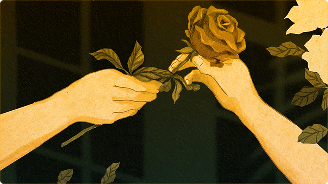
The Quiet Architecture of Trust
September 15, 2025
We like to believe that as adults, we are the sole architects of our emotional lives, making logical choices about who we love and how we react to the world. But if you look closely at the way you argue with a partner or the way you pull away when someone gets too close, you'll start to see the faint, indelible outlines of a map that was drawn long before you knew how to read. Our earliest experiences with the people who cared for us—or failed to—function as a sort of emotional "operating system." This system runs quietly in the background, influencing our settings for trust, our thresholds for pain, and our definitions of what "love" actually feels like. We don't just find partners; we find familiar patterns. We are often drawn to the very things that hurt us as children, not because we are masochistic, but because our hearts recognize the "shape" of that specific kind of struggle.
Consider the person who is constantly seeking reassurance, the one who feels a cold spike of panic if a text goes unanswered for an hour. This isn't a personality flaw or "neediness" in a vacuum; it's often the echo of an inconsistent environment. If your early world was a place where love was given and then abruptly taken away, or if you had to perform to receive attention, your adult heart remains on high alert. You become a master at reading the weather of other people's moods, scanning for the slightest shift in temperature. To you, silence isn't just silence—it's a precursor to abandonment. You operate from a map that says love is fragile and must be constantly earned or defended. This leads to a life of high-intensity emotional labor, where you are always trying to fix problems that haven't even happened yet, driven by a ghost from twenty years ago.
The Quiet Architecture of Trust
September 15, 2025
The Uncharted Waters of Platonic Intimacy
January 29, 2025
The Inner Saboteur and the Fear of Being Happy
June 17, 2025
On the other end of the spectrum is the person who feels suffocated by too much closeness. When a relationship starts to get real, they feel an instinctive urge to retreat, to find a "reason" why the other person isn't a good fit, or to bury themselves in work. This is the map of the self-contained child—the one who learned early on that relying on others was a losing game. If your needs were ignored or if vulnerability was met with ridicule, you learned that the only safe place to be was inside yourself. As an adult, intimacy feels like a trap or an invasion. You mistake your independence for strength, when in reality, it's a fortress built to protect a very small, very lonely part of you. You want love, but your map tells you that the price of love is your freedom, so you keep one foot out the door just in case.
These childhood maps also dictate how we handle conflict. Some of us come from "loud" homes where anger was a constant, searing heat; we might grow up to be people who shut down at the first sign of a raised voice, literally unable to process the emotion. Others come from "silent" homes where nothing was ever discussed, but the tension was thick enough to touch. In those cases, we might grow up to be "stirrers," creating drama just to get a reaction, because a loud fight feels more honest and less terrifying than a quiet resentment. We are essentially re-enacting the dramas of our youth, hoping that this time, we can change the ending. We look for the "parental" qualities in our partners, unconsciously trying to get the validation we missed out on or to finally win the argument we lost when we were six years old.
The work of emotional maturity isn't about erasing this map—that's impossible. You can't unlearn the foundations of your psyche. Instead, it's about becoming a "conscious cartographer." It's the process of looking at your reactions and saying, "Oh, that's not my partner being distant; that's my old fear of being forgotten." When you can name the map, it stops owning you. You start to see that your "type" might actually just be a set of familiar red flags that you've mistaken for chemistry. Real growth happens in the space between the impulse and the action. It's the moment you feel the urge to run or to cling, and you choose to stay still instead. You begin to realize that while you didn't get to choose the map you were given, you are the one who decides which roads to drive down now.
Ultimately, understanding how our childhood maps our hearts is an act of profound self-compassion. It allows us to stop berating ourselves for being "broken" and start seeing ourselves as survivors of our own histories. We all carry a cargo of old ghosts into our adult lives, and so does everyone we meet. When two people come together, it isn't just two individuals; it's two entire histories, two sets of maps, and two groups of ghosts trying to find a way to coexist. If we can approach our relationships with the knowledge that everyone is navigating by an old, imperfect chart, we can find a little more patience for the detours. We can learn to build new landmarks of safety, gradually redrawing the map until it finally leads us to a place that feels like home.