


The Psychology of Why We Love True Crime
January 12, 2026
Why do we get a rush of warmth from the smell of a particular old book, the crackle of a vinyl record, or the pixelated graphics of a 1990s video game? In a world obsessed with "the new," our attachment to the old is more than just a hobby—it is a psychological survival tactic. For centuries, nostalgia was considered a medical disease (a form of "melancholy" experienced by sailors). Today, however, psychologists view it as a vital resource for mental health. We love old things not because they are objectively better, but because they serve as "anchors" in the choppy waters of the present.
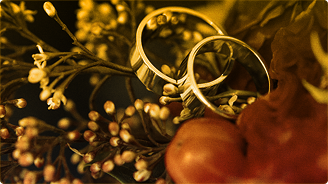
The primary driver of our love for the old is Self-Continuity. As we age, our lives change drastically—we move cities, change jobs, and lose people. This can lead to a fragmented sense of self. Nostalgia acts as the "thread" that sews these pieces together. By engaging with objects or media from our past, we remind ourselves that we are the same person who felt that joy twenty years ago. Old things provide a sense of Biographical Stability. In a world that demands we constantly "reinvent" ourselves, nostalgia allows us to simply be ourselves, rooted in a history that feels solid and certain.
The Psychology of Why We Love True Crime
January 12, 2026

The Psychology of Why We Love the "Underdog" Story
December 29, 2025
The Psychology of Why We Are Obsessed with "The End of the World"
June 10, 2025
Another factor is The Positivity Effect (or "Rosy Retrospection"). Our brains are remarkably good at filtering out the mundane stress and boredom of the past while highlighting the peaks of joy. When we look at an old toy or watch a movie from our childhood, we aren't just seeing the object; we are seeing it through a "cognitive filter" that has stripped away the original context of school stress or childhood anxieties. We are interacting with a distilled version of happiness. This makes "old things" feel like a "safe room" where the complexity of the modern world cannot reach us.
Nostalgia also serves as an Emotional Homeostasis Tool. Research shows that people tend to experience nostalgia most frequently when they are feeling lonely, cold, or anxious. It is an "internal heating system." When the present feels threatening or overwhelming, the brain reaches back into the archives for a time that was "solved." Because we know how the past turned out, it feels "safe" compared to the unpredictable future. Old things provide Existential Comfort; they are proof that we have survived, that we have belonged, and that we have been happy before.
Finally, there is the Aesthetic of Authenticity. In an era of digital perfection and mass-produced disposability, "old things" carry the "patina of time." We are drawn to the physical weight of a vintage camera or the "imperfections" of an old leather jacket because they feel "real" in a way that a plastic, modern equivalent does not. This is known as the "Endowment Effect"—we value things more because they have a story. An old object is a physical manifestation of time; it has survived, and by extension, it makes us feel like we can survive too.
Ultimately, our love for old things is a way of honoring our own journey. Nostalgia shouldn't be a place where we live, but it is a wonderful place to visit. It reminds us that while the "new" is where we grow, the "old" is where we are rooted. By keeping a foot in the past, we find the emotional stability to walk into the future. We realize that the "good old days" aren't a time we lost, but a feeling we carry within us, ready to be summoned whenever the world feels a little too fast and a little too cold.